

Alberta vs. Rats: How We Built a Rat Population-Free Legacy (And How You Help Keep It That Way)
Let me tell you something you don’t hear every day: Alberta is one of the only places on Earth that’s truly without an established rat population.. Sounds wild, right? But it’s 100% true, and it didn’t happen by accident. It’s the result of 75 years of serious grit, smart strategy, and the kind of teamwork that would make any community proud.
Use our quick navigation guide below to jump to any point of our blog on Alberta vs. Rats: How We Built a Rat-Free Legacy: 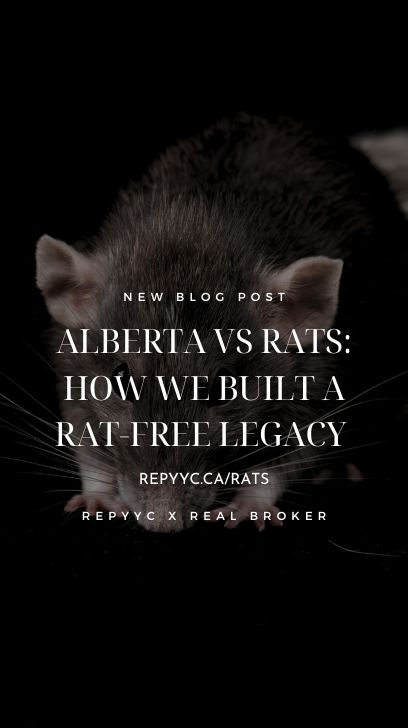
- Why Staying Rat-Free Matters
- The Early Days: A Bold Start in 1950
- Meet the Rat Control Legends This effort wasn’t just some government program
- How the Program Evolved Over the years
- Our Modern-Day Rat Defense System Staying rat-free isn’t a one-and-done deal
- Your Role: How Every Albertan Can Help This isn’t just about the pros
- Rat-Proofing Your Property Want to keep your place rodent-free?
- No Pet Rats Allowed
- Our Ongoing Mission
- Wrapping It Up
Why Staying Rat-Free Matters
It’s easy to take our rat-free status for granted — but we shouldn’t. The reason we work so hard to keep Alberta free of established rat populations is because the risks of letting rats establish themselves are just too high.
Rats aren’t just a nuisance. They’re destructive. They chew through walls, wires, insulation, and grain storage — which leads to expensive repairs and lost income for farmers and property owners. Even more concerning, rats are carriers of serious diseases. We’re talking leptospirosis, salmonella, and the plague.
There’s also the environmental side. Rats are invasive. They throw ecosystems out of balance by preying on native birds, reptiles, and small mammals. Once they get in, they’re nearly impossible to fully eradicate — just look at other provinces and countries that are constantly trying to manage rat populations.
Staying without a rat population means fewer public health risks, lower agricultural losses, and less pressure on local wildlife. It’s good for business, good for our health, and good for our environment. It’s a legacy worth protecting.
The Early Days: A Bold Start in 1950

Back in 1950, Norway rats were spotted near Alsask, right on Alberta’s eastern edge. These pests had been creeping across the prairies since the 1920s, moving west at about 24 km a year. The Alberta government knew right away: if we didn’t act fast, these rats could destroy crops, spread disease like the sylvatic plague, and mess with our economy.
So what did they do? They handed the reins to the Department of Agriculture and got to work.
Meet the Rat Control Legends This effort wasn’t just some government program. It was built by passionate people:
-
Napoleon Poulin, aka "the man who killed 10 million rats," kicked things off in 1951. He even created his own rat poison, reportedly called Poulin's Rat Doom. His mission? Fueled by a childhood experience where rats killed his puppy.
-
William Lobay? He dreamed up the idea of a special control zone.
-
Joseph B. Gurba? He ran the program from 1953 to 1982 and helped it grow.
-
And today, Karen Wickerson — Alberta’s own "rat lady" — carries that torch forward.
How the Program Evolved Over the years, the program has adapted to new challenges:
-
The Agricultural Pests Act was a game-changer. Since 1950, rats have been declared pests, and the Act makes every Albertan responsible for keeping them out.
-
Back in the day, people learned what rats looked like from preserved specimens. Toxic substances like arsenic trioxide were used early on but eventually phased out.
-
Public education has always been key. Posters, pamphlets, radio — you name it, we used it.
-
Enforcement started in 1955. Education came first, but if folks didn’t comply, court was the next step.
-
Even Lloydminster got special treatment: the Act applies to both sides of the border there.
Thanks to all of this, hundreds of infestations were reported in the 1950s, dropping to only a few each year by the 1960s. It took decades of determination, but we did it.
Our Modern-Day Rat Defense System Staying rat-free isn’t a one-and-done deal. Alberta’s defense system is layered and relentless:
The Rat Control Zone (RCZ) We’ve got a 600-km long buffer zone along the Saskatchewan border, from Cold Lake to Montana. It’s about 30 km wide and patrolled constantly by pest control specialists. And don’t forget the Rockies—our natural shield to the west.
Constant Surveillance Teams inspect hotspots like barns, grain bins, silage pits, and livestock areas. If a rat shows up, the response is fast and silent. Think traps, bait stations, even cameras. The goal? Catch them before they settle down and start a family.
As Karen Wickerson puts it: "Early detection is everything."
Legal & Municipal Muscle The Agricultural Pests Act gives real teeth to enforcement. The rural municipalities along the RCZ are on the front lines, with funding and backup from the province. And yes — Alberta and Saskatchewan even share info to stay on top of the threat.

Your Role: How Every Albertan Can Help This isn’t just about the pros. Everyone in Alberta plays a role in keeping our province rat-free.
If You See a Rat, Report It Seriously, this is huge. Snap a photo, mark the location, and get in touch. Email rats@gov.ab.ca or call 310-FARM (3276). It’s toll-free, and it works right from your phone.
In 2023, 450 sightings were reported. Only 23 were confirmed rats. But those 23? They could’ve become hundreds. Your tip matters.
Know the Difference: Not All Rodents Are Rats A lot of false alarms come from muskrats, pocket gophers, squirrels, or even Alberta’s native packrats. But the invasive Norway rat? Here's what to look for:
-
Grey-brown body with lighter underbelly
-
Body about 40 cm long
-
Tail shorter than the body, mostly hairless, ridged
-
Small ears that don’t cover the eyes
-
Blunt nose

Plus, look for signs like:
-
Cylindrical burrows (5-7.5 cm wide)
-
Beaten-down trails
-
Chew marks on wood or even concrete
-
Musky odors and greasy smudge trails
-
Olive-pit shaped droppings
Rat-Proofing Your Property Want to keep your place rodent-free? Here’s how: 
-
Eliminate food sources: Keep trash sealed, clean up spilled grain.
-
Remove shelters: Flatten out hiding spots like tires or boards.
-
Build smart: Elevate sheds, protect doors/windows, and seal entry points.
-
Check your vehicle: Especially after road trips out of province.
No Pet Rats Allowed
That’s right — it’s illegal in Alberta to keep pet rats. Even the white, domesticated kind. Only zoos, universities, or research facilities are exempt. If one escapes, it could kick off a brand-new infestation. Not worth the risk.
Our Ongoing Mission:
Stay Vigilant We’ve come a long way, but the battle isn’t over. Experts agree: the second we get complacent, rats could gain a foothold. Alberta’s program is world-famous for a reason. We acted fast in the '50s, and we haven’t stopped since.
Wrapping It Up:
A Shared Victory Keeping Alberta rat-free is one of the coolest (and least talked about) public health wins anywhere. And it only works because everyone — from the original rat patrol to everyday folks — steps up.
Let’s keep this legacy alive. Stay alert. Report what you see. And be proud to live in one of the only truly rat-free zones on Earth.


Protecting Your Home & Our Province’s Rat-Free Legacy
Dusko Sremac – Calgary & Area REALTOR® | Team Lead, REPYYC
Alberta’s rat-free status is one of the province’s most unique success stories — and protecting your property plays a key role in keeping it that way. As a Calgary REALTOR® with a background in construction, I know how critical it is to safeguard your biggest investment from pests, damage, and hidden risks.
From rodent-proofing strategies to smart upgrades that protect long-term value, my team helps homeowners stay proactive and prepared. Because when it comes to real estate, prevention always costs less than repair.
Whether you’re buying, selling, or simply looking to protect your home, let’s connect and build a plan that keeps your property — and Alberta — safe for years to come.
Enjoy this blog post? Click here to subscribe for updates
Leave A Comment