
Calgary’s Concrete Chronicles: The Calgary Zoo
This is the next chapter in Calgary’s Concrete Chronicles — our ongoing deep dive into the places built of steel, stone, and concrete that quietly shape how Calgarians live, gather, and connect with the city. These aren’t just structures. They’re long-standing civic investments that tell stories about who Calgary was, who it is, and who it’s becoming. 
Today’s stop isn’t a single building or plaza — it’s an entire living campus rooted along the Bow River: the iconic Calgary Zoo. For more than a century, it’s been a place where infrastructure, conservation, and community intersect in a way few urban spaces ever manage.
The Zoo isn’t just about animals. It’s about how Calgary chose to build space for education, science, recreation, and empathy — right in the heart of the city.
Use the navigation guide below to explore the origins, design, and evolving legacy of the Calgary Zoo:
- Origins: From Island Park to City Landmark
- Designing a Living Campus Along the Bow
- Expansion, Setbacks, and Reinvention
- Conservation, Research, and Education
- A Gathering Place for Calgarians
- The Future of the Calgary Zoo
Origins: From Island Park to City Landmark
The Calgary Zoo traces its roots back to 1912, when the city began keeping animals on St. George’s Island — a tree-lined stretch of land in the Bow River just east of downtown. What started modestly, with a small collection of donated animals, quickly became something bigger: a public space where Calgarians could gather, learn, and connect with the natural world.
In the early days, the Zoo reflected the thinking of its time — simple enclosures, practical buildings, and a focus on exhibition. But even then, the location mattered. Placing the Zoo along the Bow River embedded it into the daily rhythm of the city, linked to pathways, bridges, and neighbourhoods that continue to shape its identity today.
From the start, the Zoo was public infrastructure with purpose — built not just for entertainment, but for education and civic pride.
Designing a Living Campus Along the Bow
Unlike a single landmark structure, the Calgary Zoo is a collection of evolving architectural responses spread across islands and riverbanks. Over decades, concrete, glass, steel, and landscape design have been layered thoughtfully to balance function, animal welfare, and visitor experience.
Major zones like Destination Africa, Canadian Wilds, and Prehistoric Park reflect a shift away from cages toward immersive habitats. These spaces required serious engineering — reinforced retaining walls, climate-controlled interiors, elevated boardwalks, and flood-resistant foundations — all designed to withstand Calgary’s freeze-thaw cycles and Bow River fluctuations.
The result is a campus that feels open and natural while quietly relying on heavy-duty infrastructure beneath the surface.
Expansion, Setbacks, and Reinvention
Like Calgary itself, the Zoo’s history includes moments of disruption that reshaped its future. The most defining came in 2013, when catastrophic flooding from the Bow River caused widespread damage across St. George’s Island. Entire exhibits were destroyed. Infrastructure failed. Decades of development were put to the test.
But the rebuild marked a turning point.
Instead of simply restoring what was lost, the Zoo reinvested with intention. New flood-mitigation strategies, elevated mechanical systems, reinforced barriers, and resilient materials were incorporated across the grounds. The disaster accelerated a long-term vision focused on sustainability, climate awareness, and smarter urban design.
The Zoo didn’t just recover — it evolved.
Conservation, Research, and Education
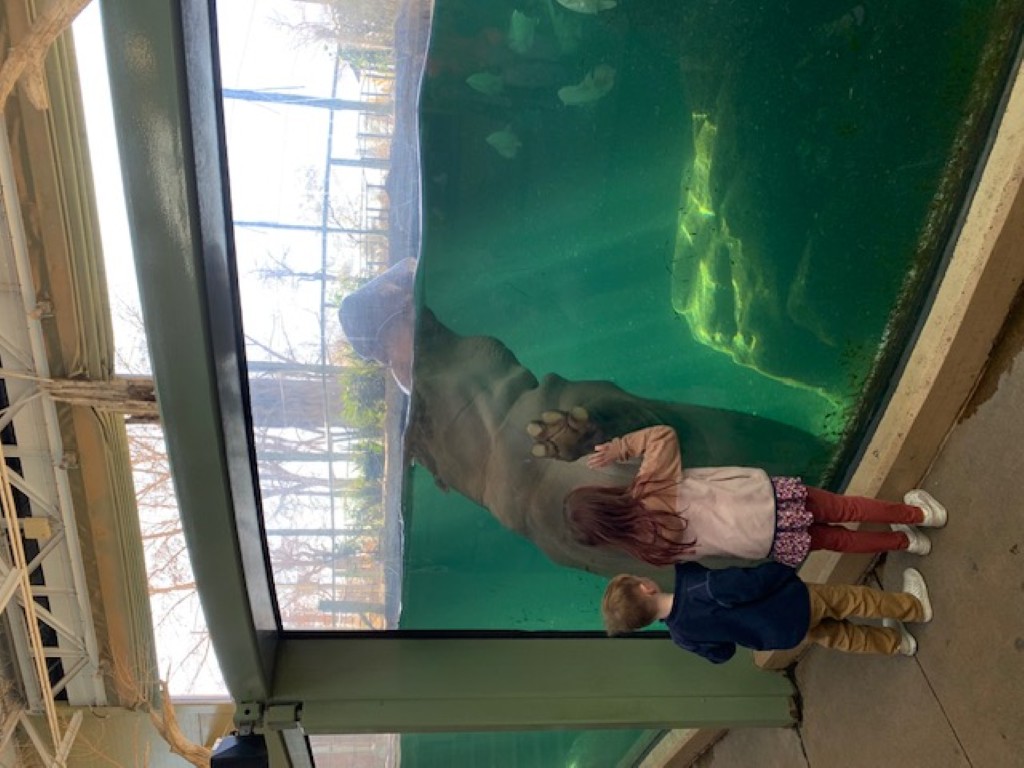
Modern concrete at the Calgary Zoo serves a bigger mission than display. Behind the scenes, research facilities, veterinary hospitals, and conservation centres support global wildlife initiatives that stretch far beyond city limits.
The Zoo plays an active role in breeding programs for endangered species, habitat restoration projects, and educational outreach that reaches thousands of students every year. These efforts rely on purpose-built spaces — labs, learning centres, and specialized enclosures — designed for long-term scientific use.
It’s infrastructure with empathy baked in: spaces designed to protect, study, and sustain life rather than simply contain it.
A Gathering Place for Calgarians
For generations, the Calgary Zoo has been woven into everyday life. School field trips. Family weekends. First dates. Charity walks. Holiday light festivals. It’s one of the rare places where Calgarians of every age, background, and neighbourhood intersect.
Its location — bordered by Inglewood, Bridgeland, and the Downtown East Village — makes it one of the city’s most accessible major attractions. Pathway connections, pedestrian bridges, and transit access reinforce its role as shared civic space, not a gated destination.
The Zoo functions as both retreat and connector — a place to slow down while staying firmly rooted in the city.
Dinny the Dinosaur: Calgary’s Original Concrete Icon
Standing tall since 1937, Dinny the Dinosaur is one of Calgary’s most recognizable landmarks — and the only surviving figure from the Calgary Zoo’s former Natural History Park. Built from steel-reinforced concrete over a wire mesh frame, Dinny is a 36-metre-long brontosaurus that has watched over generations of zoo-goers for nearly a century.
Originally, Dinny was one of about 20 life-sized concrete dinosaurs created to educate and entertain during a time when the city was looking to expand its public attractions. While the rest of the park’s sculptures have since been lost to time and redevelopment, Dinny remains — a testament to both the durability of early concrete work and Calgary’s quirky architectural past.
In the 1980s, Dinny was designated as a Provincial Historic Resource, preserving his place in the city’s heritage. He was later granted Municipal Historic Resource status in 2009, recognizing his cultural and historical value not just as a zoo artifact, but as a symbol of Calgary’s mid-century imagination and civic pride.
More than just a roadside photo-op, Dinny represents an era when concrete was used not just for infrastructure, but for storytelling. Today, he stands as a rare example of public concrete art from the 1930s — and a nostalgic landmark that continues to capture the hearts of Calgarians.
Prehistoric Park: Concrete in a Modern Dinosaur Exhibit
Prehistoric Park is a seasonal exhibit at the Calgary Zoo featuring a series of static, life-sized dinosaur models arranged throughout a landscaped outdoor space. Designed to evoke Alberta’s prehistoric environment, the park serves both as an educational feature and an interactive area for families.
While the models themselves are primarily constructed from lightweight composite materials, concrete is used functionally throughout the exhibit — most notably in the pathways, retaining walls, and foundation bases for the larger figures. These concrete elements provide durability in a high-traffic, all-weather setting, ensuring long-term structural support and safety compliance.
Concrete also plays a role in the exhibit’s play areas, such as the Dino Slide and Dino Dig, where it forms the base and structural support beneath themed cladding and soft surfaces. These installations reflect a contemporary use of concrete in public park design — blending practicality with themed storytelling in a child-friendly environment.
Though very different in construction and intention from the original 1930s concrete dinosaurs, Prehistoric Park continues the Calgary Zoo’s tradition of using concrete as a foundation for educational storytelling.
The Future of the Calgary Zoo
Looking ahead, the Calgary Zoo continues to balance growth with responsibility. Climate resilience, energy efficiency, and animal-first design principles now guide every major upgrade and expansion.
Future plans focus on modernizing aging infrastructure, expanding conservation programming, and enhancing year-round usability — all while respecting the Zoo’s riverfront setting and its role within Calgary’s broader urban ecosystem.
As the city grows denser and more vertical, spaces like the Calgary Zoo become even more essential. They offer breathing room. Perspective. A reminder that smart cities aren’t just built upward — they’re built thoughtfully.
Share Your Calgary Zoo Story

Every visit to the Calgary Zoo highlights just how special this place is — whether it’s a weekend outing or a day of discovery with the family. With its wide variety of animals, immersive habitats, and deep local history, the zoo offers a meaningful connection to the natural world.
Visitors can watch four species of penguins splash, dive, swim, and waddle at Penguin Plunge, a climate-controlled habitat that mirrors their native environments. It's a favourite stop, especially in winter, when the penguins are at their most active.
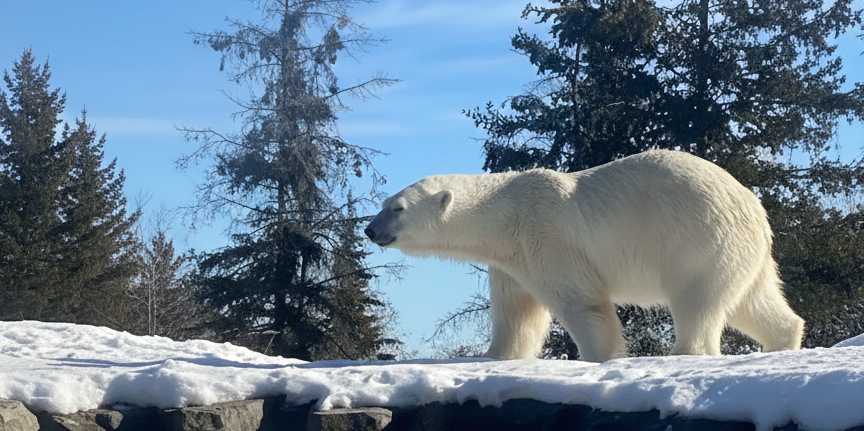
In the Wild Canada zone, guests can observe Siku, the zoo’s resident polar bear. Adapted to the harsh Arctic, polar bears have black skin under their translucent fur, helping them absorb and retain heat — one of many fascinating facts shared throughout the exhibit. Siku’s habitat is carefully managed by a team of wildlife specialists, reflecting the zoo’s commitment to animal welfare and education.
Calgary is fortunate to have a space where visitors can observe animals up close, explore thoughtfully designed environments, and learn about species conservation in an engaging, hands-on way.
Was your first Zoo visit part of a school trip? A family tradition? A quiet afternoon escape? For over a century, the Calgary Zoo has been collecting stories alongside species.
Share your memories with us — or tag @repyyc on Instagram — and you might be featured in an upcoming Concrete Chronicles community story.

Helping You Live Near Calgary’s Most Enduring Landmarks
Landmarks like the Calgary Zoo do more than create memories — they anchor communities. Neighbourhoods such as Inglewood, Bridgeland, and the East Village have evolved around this space, blending walkability, green space, and long-term character in a way newer areas simply can’t replicate.
I help buyers and homeowners understand how living near iconic places like the Zoo shapes daily life, resale value, and neighbourhood identity — not just today, but over decades. Real estate isn’t only about the house itself; it’s about the stories, spaces, and landmarks that surround it.
Dusko Sremac – Calgary & Area REALTOR® | Team Lead, REPYYC
Cell: 403-988-0033 | Email: dusko@repyyc.com
Enjoy this blog post? Click here to subscribe for updates
Leave A Comment