

Calgary Safe at Home: A Fire Safety Series - Part 6
Electrical and Extension Cord Safety in Calgary Homes
Electrical problems rarely begin with flames shooting out of the wall.
They usually start with smaller warnings: an outlet that feels warm, a breaker that keeps tripping, lights that flicker or an extension cord that has quietly become part of the permanent wiring plan.
These signs are easy to ignore because the power normally comes back on and everything appears to keep working.
That does not mean the problem has disappeared.
Calgary homes now support far more electrical equipment than they did even twenty years ago. Home offices, air conditioners, electric vehicles, hot tubs, basement suites, gaming systems and dozens of rechargeable devices all place additional demand on the electrical system.
The answer is not to keep adding power bars until every outlet resembles an electrical family tree.
It is to use cords and appliances properly, recognize warning signs and make sure the home can safely support how you actually live.
Use Our Quick Navigation Guide Below To Jump To Any Part On Electrical and Extension Cord Safety in Calgary Homes: .jpg)
- Electrical Problems Do Not Fix Themselves
- Extension Cords Are Temporary
- Inspect Cords Before Using Them
- Power Bars Do Not Create More Power
- Major Appliances Need Proper Wall Outlets
- Space Heaters Need Their Own Space
- Create Safer Charging Areas
- Use Certified Electrical Products
- GFCI and AFCI Protection
- Do Not Ignore Loose or Missing Wall Plates
- Older Homes May Need More Than More Outlets
- Modern Upgrades Require Electrical Capacity
- Electrical Work May Require a Permit
- What Buyers Should Notice
- What Sellers Should Address Before Listing
- Pay Attention Before the Power Goes Out
Electrical Problems Do Not Fix Themselves
A breaker trips for a reason.
It may be responding to an overloaded circuit, damaged appliance, wiring fault or another unsafe condition. Resetting it repeatedly without identifying the cause is not a repair.
Contact a qualified electrician if you notice:
- Breakers that repeatedly trip
- Fuses that frequently blow
- Lights that flicker or dim unexpectedly
- Warm or discoloured outlets and switches
- Buzzing, crackling or sizzling sounds
- Sparks when inserting or removing a plug
- A burning or rubber-like smell
- Loose outlets or plugs that will not stay securely connected
- A tingling sensation when touching an appliance
If you smell burning, see smoke or believe there may be an active electrical fire, leave the home and call 9-1-1 from outside.
Do not open walls, remove the electrical panel cover or attempt to locate the problem while the condition is active.
Calgary Electrical and Appliance Safety
Extension Cords Are Temporary
An extension cord is useful when you need temporary power in a location without a nearby outlet.
It is not a substitute for permanent wiring.
If the same extension cord has been powering a television, office, freezer or appliance for months, the home probably needs another properly installed outlet.
When using an extension cord:
- Confirm it is rated for the equipment being connected
- Use an outdoor-rated cord outside
- Keep indoor cords inside
- Fully uncoil the cord before using it with higher-demand equipment
- Keep connections dry and protected
- Insert plugs completely
- Disconnect it by holding the plug - not pulling the cord
- Store it loosely after use to avoid damaging the internal wiring
Do not run extension cords:
- Under rugs or carpets
- Across doorways or stairs
- Through walls, ceilings or floors
- Behind furniture where they can be pinched
- Near water or wet surfaces unless specifically designed for that use
- Where people, vehicles or equipment can damage them
A cord hidden under a rug is not safer because you cannot see it. It is simply harder to notice when it overheats or becomes damaged.
Inspect Cords Before Using Them
Replace a cord if it is cracked, frayed, crushed, loose, melted or missing a grounding pin.
Do not wrap damaged areas with electrical tape and return the cord to service. Tape can hide damage, but it does not restore the cord’s original insulation or internal wiring.
Also inspect charging cables used for phones, tablets, laptops, tools and children’s devices. Repeated bending near the connector can damage the insulation and expose wires.
If a cord or plug becomes hot during normal use, disconnect it and investigate the cause. Warm electrical equipment is not something to “keep an eye on” for the next six months.
Quick Rule
If the Cord Has Become Permanent, the Solution Should Be Permanent
Extension cords are meant to provide temporary power. They should not become part of the home’s everyday electrical system.
Have a qualified electrician determine whether another outlet or circuit should be installed.
Power Bars Do Not Create More Power .jpg)
A power bar gives you additional places to connect devices. It does not increase the amount of electricity the circuit can safely provide.
Choose power bars and surge protectors with recognized Canadian certification and internal overload protection. Follow the manufacturer’s electrical rating and instructions.
Do not:
- Connect one power bar to another
- Plug a power bar into an extension cord
- Use a power bar with a major appliance
- Use one that is cracked, loose, scorched or damaged
- Place it under furniture, rugs or piles of clothing
- Cover it while equipment is operating
Connecting power bars together is sometimes called daisy-chaining. The name sounds cheerful. The fire risk is less charming.
Major Appliances Need Proper Wall Outlets
Major appliances should generally be plugged directly into suitable wall outlets.
This includes:
- Refrigerators and freezers
- Stoves and microwave ovens
- Washing machines and dryers
- Dishwashers
- Window air conditioners
Do not use an ordinary extension cord or power bar to operate a major appliance. These appliances can draw enough electricity to overheat an underrated cord or connection.
Heat-producing countertop appliances also require care. Avoid operating multiple high-demand appliances from the same outlet or circuit at the same time.
The Calgary Fire Department recommends connecting only one heat-producing appliance, such as a coffee maker, toaster or space heater to an outlet at a time.
Space Heaters Need Their Own Space
Calgary winters make portable heaters convenient. They also make it tempting to place them wherever there is a cold spot and an available plug.
Plug a portable space heater directly into a wall outlet. Do not use an extension cord or ordinary power bar.
Keep the heater at least one metre away from anything that can burn, including:
- Bedding
- Curtains
- Furniture
- Clothing
- Paper
- Children’s toys
Place it on a stable surface where it cannot be knocked over. Keep children and pets away and turn it off before leaving the room or going to sleep.
Stop using the heater if the plug, cord or outlet becomes hot, discoloured or damaged.
An extension cord disappearing under a rug to power a space heater beside the couch is not a heating strategy. It is a collection of fire risks sharing one room.
Create Safer Charging Areas
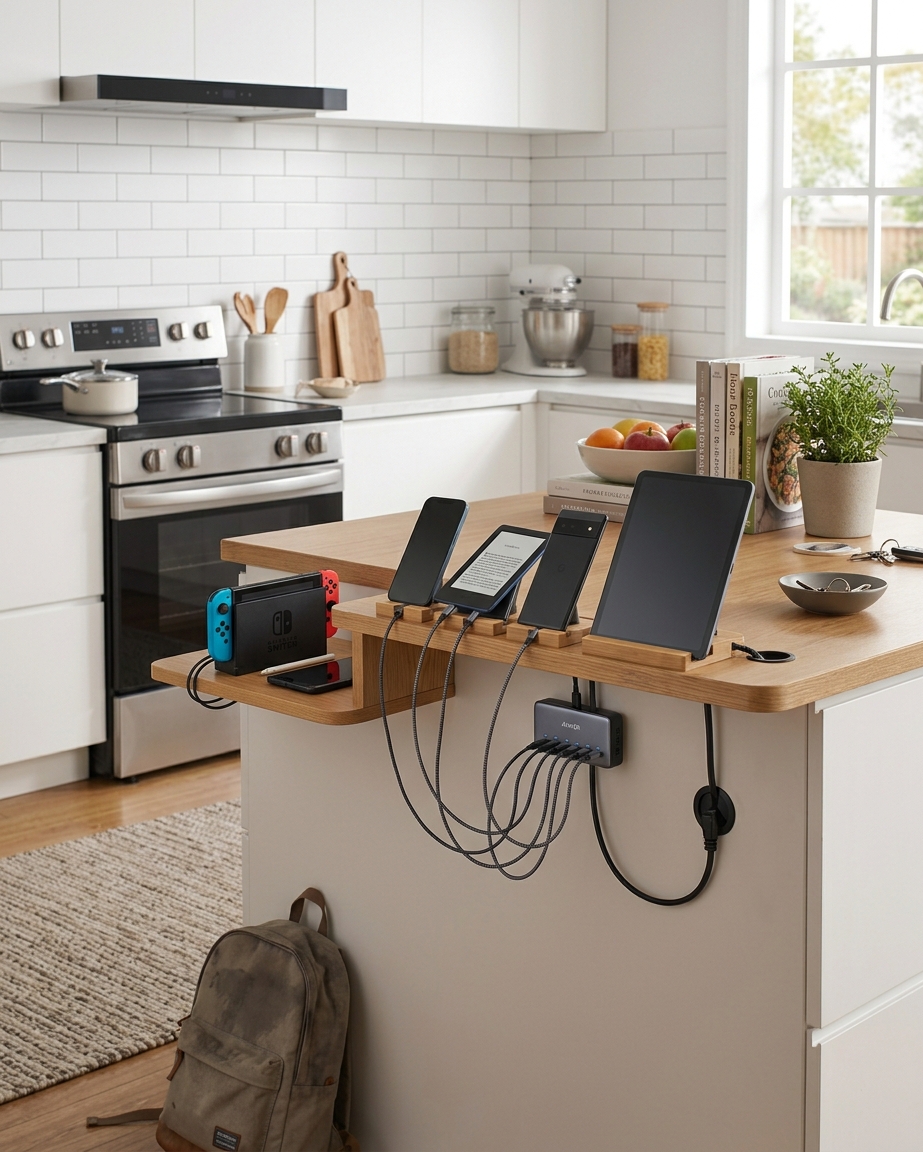
Most Calgary homes now have multiple devices charging at the same time.
Phones, tablets, laptops, cordless tools, toys, vacuums, e-bikes and scooters all contain rechargeable batteries and require compatible charging equipment.
Charge devices on a firm, non-combustible surface with enough airflow around them.
Do not charge devices:
- On a bed, couch or upholstered chair
- Under pillows or blankets
- Near an exit
- In direct sunlight or extreme temperatures
- Using a damaged or incompatible charger
- Where children or pets can damage the cord
Stop using a battery or device if it becomes unusually hot, swells, leaks, changes shape, makes unusual sounds or produces an odour.
Do not place damaged lithium-ion batteries in household garbage or recycling carts.
Read Our Calgary Home Fire Safety Guide
Use Certified Electrical Products
Look for a recognized Canadian certification mark directly on electrical appliances, chargers, power bars and extension cords.
Common marks include CSA, cUL, ULC and cETL.
Certification is especially important when buying inexpensive products from third-party online marketplaces.
A product description may say an item is approved or tested. The mark, manufacturer and model information should still appear on the physical product.
If that information is missing, leave it unplugged.
GFCI and AFCI Protection
Ground-fault circuit interrupters, commonly called GFCIs, reduce the risk of electrical shock by shutting off power when they detect electricity travelling along an unintended path.
GFCI protection is used where electricity may be close to water, including kitchens, bathrooms, garages, basements and outdoor areas.
Arc-fault circuit interrupters, or AFCIs, help protect against electrical fires caused by dangerous arcing conditions.
Test GFCI and AFCI devices monthly or according to the manufacturer’s instructions.
If a device will not reset, repeatedly trips or does not operate correctly during testing, have it inspected.
Do Not Ignore Loose or Missing Wall Plates
Outlets and switches should be securely mounted and covered with proper wall plates.
Replace broken or missing covers. Do not leave gaps where wiring or electrical components are exposed.
An outlet should hold a plug securely. If plugs repeatedly fall out or feel unusually loose, replace the receptacle through a qualified professional.
Use tamper-resistant receptacles where required, particularly in areas accessible to children. Plastic outlet caps are not a substitute for correcting a damaged or loose outlet.
Older Homes May Need More Than More Outlets
Many older Calgary homes were designed before home offices, air conditioning, electric vehicles, hot tubs and dozens of connected devices became normal.
The concern is not simply the age of the house. It is whether the electrical system has been properly maintained and upgraded to support current demand.
Older properties may contain:
- Smaller electrical services
- Fuse panels
- Older breaker panels
- Aluminum wiring
- Knob-and-tube wiring
- Ungrounded receptacles
- Renovation work completed without permits
- Too few circuits for modern appliances
None of this should be assessed by guessing from the age of the wall switch. Have the system reviewed by a qualified professional.
What to Know When Buying an Older Calgary Home
Modern Upgrades Require Electrical Capacity .jpg)
Adding new electrical equipment can significantly increase the demand placed on a home.
Projects that may require a capacity review and permits include:
- Electric vehicle chargers
- Central air conditioning
- Heat pumps and electric heating
- Hot tubs and pools
- Energy-storage systems
- New secondary suites
- Backyard suites
- Major kitchen or basement renovations
The City of Calgary recommends having a registered electrical contractor confirm that the existing service can safely handle the additional load.
In some homes, the solution may be a service upgrade. In others, an approved energy-management system may help manage competing electrical demands.
The right answer depends on the property. It is not determined by whether there appears to be an empty space in the breaker panel.
Is Your Home Ready for Modern Electrical Demand?
Electrical Work May Require a Permit
In Calgary, an electrical permit is required for new wiring installations and when extending or altering existing branch-circuit wiring.
A permit is generally not required when only replacing an existing fixture, but the details of the work matter.
Homeowners who qualify may obtain permits for certain work they complete themselves. If a contractor is performing the work, the contractor must obtain the appropriate permit.
Do not pull a homeowner permit on behalf of someone else doing the work.
Concealed electrical work completed without permits can become expensive to address. A licensed electrical contractor may need to obtain the permit, assess the installation and expose portions of the wiring for inspection.
Drywall is considerably cheaper before it has to be opened twice.
Calgary Homeowner Electrical Permits Calgary Permits and Property Compliance
What Buyers Should Notice

A renovated home can have beautiful finishes and questionable wiring behind them.
During a showing and home inspection, look for:
- Extension cords being used as permanent wiring
- Multiple connected power bars
- Loose, damaged or discoloured outlets
- Missing outlet and switch covers
- Flickering lights
- Improvised wiring in garages and basements
- Open electrical boxes
- Appliances connected through extension cords
- Burning smells or buzzing sounds
- Renovations without clear permit history
Ask about the panel’s age, electrical-service capacity and any significant upgrades.
If the property includes air conditioning, a hot tub, EV charger, basement suite or major renovation, confirm that the work was properly completed and permitted where required.
A home inspector can identify visible concerns, but specialized electrical questions should be reviewed by a qualified electrician.
Calgary Home Inspection Checklist
What Sellers Should Address Before Listing
Electrical issues discovered during an inspection can create uncertainty for buyers, even when the eventual repair is straightforward.
Before listing:
- Remove damaged extension cords and power bars
- Stop using extension cords as permanent wiring
- Replace missing or damaged wall plates
- Investigate flickering lights and repeatedly tripped breakers
- Secure loose switches and outlets through a qualified professional
- Gather permits and records for electrical upgrades
- Have suspicious DIY wiring assessed
- Confirm major appliances are properly connected
Do not hide a questionable connection behind furniture for the photographs.
The home inspector will move the furniture, find it and give it a much less flattering description.
Addressing legitimate electrical concerns protects the people living in the home and gives buyers greater confidence in the property.
10-Minute Home Check
Your Household Electrical-Safety Audit
Walk through the home one room at a time. Unplug and replace anything damaged, and arrange professional help for warning signs you cannot safely correct.
Cords and Power Bars
☐ No cords are cracked, frayed, crushed or taped
☐ No cords run under rugs or through doorways
☐ Power bars are not connected to one another
☐ Extension cords are only being used temporarily
☐ Outdoor cords are properly rated for outdoor use
Outlets and Switches
☐ Outlets and switches are cool and undamaged
☐ Plugs fit securely
☐ Every electrical box has an intact cover
☐ GFCI and AFCI devices pass their tests
☐ There are no buzzing sounds, sparks or burning smells
Appliances and Charging
☐ Major appliances plug directly into wall outlets
☐ Space heaters are clear of combustible materials
☐ Devices charge on firm, ventilated surfaces
☐ Chargers are compatible and undamaged
☐ Certified electrical products are being used
Electrical System
☐ Breakers are not repeatedly tripping
☐ Lights are not unexpectedly flickering
☐ Renovation and upgrade permits are available
☐ The home can support its major electrical equipment
☐ Professional help has been arranged for warning signs
Pay Attention Before the Power Goes Out
A damaged cord is easy to replace. An overloaded circuit can be corrected. An outdated electrical system can be assessed and upgraded.
These problems become considerably harder to deal with after they cause a fire.
Walk through your home this month. Look at what is plugged in, what has become permanent and what has been giving you warning signs.
If an outlet is hot, a breaker repeatedly trips or something smells like it is burning, stop using it and have the problem investigated.
Electricity should make the home work.
It should not be the thing quietly putting it at risk.
This article is Part 6 of Calgary Safe at Home: A Fire Safety Series, a practical series focused on preventing fires, protecting the people in your home and preparing for an emergency.

Electrical Safety Is Part of Protecting Your Calgary Home
Electrical problems can start with small warning signs that are easy to overlook, from repeatedly tripping breakers and flickering lights to warm outlets, damaged cords, or extension cords that have become permanent fixtures. Knowing what to watch for can help homeowners address concerns before they become bigger problems.
I help Calgary buyers and sellers look beyond the finishes of a home and pay attention to the details that can affect safety, condition, and confidence in a property. Whether you’re buying an older home, preparing to list, or considering modern upgrades such as an EV charger, hot tub, or secondary suite, understanding the home’s electrical system matters. :contentReference[oaicite:0]{index=0}
Dusko Sremac – Calgary & Area REALTOR® | Team Lead, REPYYC
Cell: 403-988-0033 | Email: dusko@repyyc.com
Enjoy this blog post? Click here to subscribe for updates
Leave A Comment