
Garage Fire Safety in Calgary: Fuel, Tools and Hazardous Materials
For many Calgary homeowners, the garage is doing a lot more than parking a vehicle.
It is a workshop, storage room, charging station, mechanical room, recycling depot and home base for lawn equipment, snowblowers, tools, paint, fuel and everything else we do not want taking up space inside the house.
That is also what makes garages a serious fire risk.
Gasoline, propane, batteries, electrical equipment, solvents, vehicles and combustible materials are often stored within a few feet of one another. When something goes wrong, a small fire can grow quickly and, in an attached garage, spread into the home.
The good news is that most garage fire hazards are preventable. You do not need an empty garage. You need a garage that is organized, maintained and used properly.
Use Our Quick Navigation Guide Below To Jump To Any Part On Garage Fire Safety in Calgary: 
- Why Garage Fire Safety Matters
- Start With Clutter and Clear Exits
- Gasoline Should Not Be Stored in the Garage
- Keep Propane Cylinders Outside
- Treat Paint, Solvents and Aerosols as Hazardous
- Oily Rags Can Start a Fire Without a Flame
- Charge Tools and Batteries Where You Can See Them
- Inspect Cords, Outlets and Equipment
- Never Idle a Vehicle in the Garage
- Keep a Fire Extinguisher Accessible
- Use Calgary’s Household Hazardous-Waste Program
- Garage Fire-Safety Checklist
- A Safer Garage Starts With Less Risk
Why Garage Fire Safety Matters
Garage fires can become dangerous very quickly when flames reach gasoline, propane, paint, aerosols, cardboard, lumber, vehicle components or pressurized containers.
An attached garage can also provide a direct path into the home if the door, walls or ceiling separating the two spaces have been damaged, altered or poorly repaired.
The goal is not to panic over every paint can or power tool. The goal is to reduce unnecessary hazards, keep incompatible materials apart, maintain equipment and make sure everyone has a clear way out.
Start With Clutter and Clear Exits 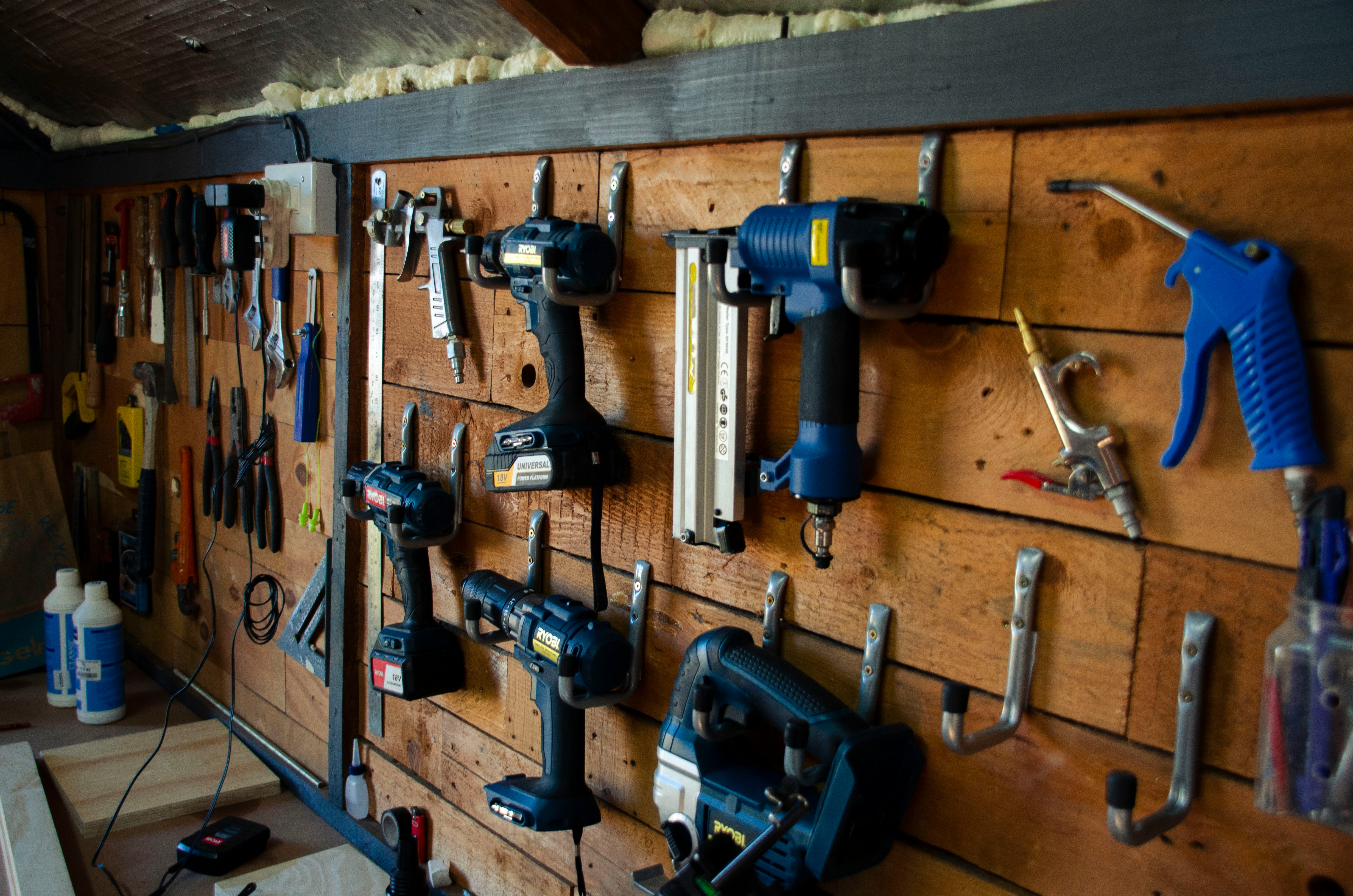
A cluttered garage does more than look messy.
It can hide leaking containers, damaged cords, overheated chargers and other warning signs. It also provides additional fuel for a fire and may block the fastest route outside.
Walk through your garage and check that:
- doors and windows open properly and are not blocked;
- walkways remain clear around vehicles, workbenches and exits;
- cardboard, paper, sawdust, wood shavings and yard waste are removed regularly;
- products are clearly labelled and containers are not leaking, rusted or damaged;
- heaters, chargers, motors and other heat-producing equipment have space around them; and
- fuels, chemicals, tools, matches and lighters are kept away from children and pets.
Do not pile boxes or stored items against the door connecting an attached garage to the home, and never prop that door open.
If the door, frame, walls or ceiling have holes or visible damage, have them assessed by a qualified professional. A quick cosmetic patch may look fine while weakening the fire separation between the garage and the house.
Gasoline Should Not Be Stored in the Garage
Gasoline vapours ignite very easily.
Gasoline should only be used as motor fuel. It should never be used as a cleaner, degreaser, fire starter or substitute for another product.
The Calgary Fire Department’s home fire-safety checklist recommends storing gasoline in an approved container inside a shed rather than the garage.
The container should be:
- tightly closed;
- clearly identified;
- approved for gasoline storage;
- kept away from heat, sparks, flames and direct sunlight; and
- stored somewhere children cannot reach it.
Never store gasoline in a glass jar, drink bottle or any other unapproved container.
Let lawn mowers, snowblowers and other small engines cool before refuelling them, and always refuel outdoors.
If you have old gasoline, leaking containers or fuel you no longer need, do not leave it sitting in the garage indefinitely. Calgary accepts gasoline, diesel, kerosene, lighter fuel, camp-stove fuel and fuel containers through designated disposal services.
Check the City’s current fuel-disposal instructions before transporting anything.
Keep Propane Cylinders Outside .jpg)
Propane cylinders should not be stored inside the home, garage, workshop or recreational vehicle, even when they appear empty.
Both full and empty cylinders can still create a hazard.
Follow the manufacturer’s instructions for safe outdoor storage. Cylinders should be upright, secure and protected from damage. Keep them away from heat, ignition sources and areas where children may tamper with them.
Never operate or store a barbecue inside the garage.
Unwanted propane cylinders should not be placed in a blue, green or black cart. They should also never be punctured, crushed or dismantled.
The City accepts propane tanks under 30 pounds at certain household hazardous-waste locations. Confirm the current drop-off instructions before heading out.
Treat Paint, Solvents and Aerosols as Hazardous
Many everyday garage products can be flammable, corrosive, toxic or chemically reactive.
These may include:
- oil-based and latex paints;
- stains, varnishes, lacquers and wood preservatives;
- paint thinner, stripper, acetone and other solvents;
- adhesives, cleaners, degreasers and cements;
- pesticides, herbicides, fertilizers and pool chemicals;
- spray paint and aerosol containers; and
- motor oil, antifreeze, brake fluid and transmission fluid.
Buy only what you reasonably expect to use.
Keep products in their original containers whenever possible, with labels readable and caps tightly closed. Do not combine leftover chemicals, even when they look similar. Mixing products can create dangerous fumes, heat or chemical reactions.
Store incompatible products separately and follow the instructions on each label for ventilation, temperature and storage.
Never puncture or crush aerosol cans.
If a container is swollen, badly corroded, leaking or unsafe to handle, do not experiment with it. Contact 311 or the appropriate disposal facility for instructions.
Oily Rags Can Start a Fire Without a Flame
Rags used with oil-based stains, varnishes, paints and certain solvents can produce heat as the product dries.
When those rags are crumpled together in a pile, bag or cardboard box, the heat can become trapped and eventually cause spontaneous combustion.
That means a fire can start without a spark or open flame.
Never leave oily or solvent-soaked rags in:
- a heap on the workbench;
- a plastic bag;
- a cardboard box; or
- an ordinary garbage bin.
Follow the product manufacturer’s disposal instructions.
The Calgary Fire Department checklist recommends placing oily rags in a metal container with a tight-fitting lid. Keep the container in a cool location away from direct sunlight, heat and other combustible materials, and arrange proper disposal as soon as possible.
Charge Tools and Batteries Where You Can See Them .jpg)
Cordless drills, lawn equipment, snow tools, e-bikes, e-scooters, power banks and other rechargeable devices commonly use lithium-ion batteries.
These batteries are generally safe when used correctly. Problems can occur when batteries are damaged, exposed to extreme temperatures, paired with incompatible chargers or left charging in unsafe conditions.
Use the original charger and battery whenever possible, or a compatible replacement from a trusted manufacturer.
Charge devices on a hard, stable surface where you can monitor them.
Do not charge batteries beside:
- gasoline;
- paint or solvents;
- cardboard;
- sawdust;
- oily rags; or
- an exit.
Stop using a battery immediately if it is:
- swollen;
- dented;
- cracked;
- leaking;
- unusually hot;
- producing an odour; or
- making popping or hissing sounds.
Calgary garages can become extremely cold in winter and very warm in summer. Follow the manufacturer’s approved charging and storage temperatures.
Health Canada advises against charging lithium-ion batteries below freezing and recommends storing them at room temperature in a dry area away from flammable materials.
We will cover household batteries, power tools and e-mobility devices in more detail later in this fire-safety series.
Inspect Cords, Outlets and Equipment .jpg)
Extension cords are useful for temporary jobs. They are not a permanent wiring solution.
Avoid daisy-chaining power bars, overloading outlets or running cords where vehicles, garage doors or tools can crush them.
Stop using equipment with:
- frayed cords;
- loose plugs;
- cracked housings;
- scorch marks;
- damaged switches; or
- repeated breaker trips.
Unplug portable equipment when it is not being used if the manufacturer recommends doing so.
Keep portable heaters well away from anything that can burn and use only equipment approved for the location and conditions.
New circuits, electrical repairs and frequently tripping breakers should be assessed by a qualified electrician. Electricity is not the category for creative DIY problem-solving.
Never Idle a Vehicle in the Garage
Never idle a vehicle inside a garage, even with the overhead door open.
Do not start or operate gasoline-powered lawn mowers, snowblowers, generators, trimmers, barbecues or other fuel-burning equipment in a garage or shed.
Carbon monoxide is colourless, odourless and potentially deadly. An open garage door does not guarantee that exhaust will stay outside or prevent fumes from entering the home.
Move fuel-powered equipment outdoors before starting it.
Install and maintain carbon monoxide alarms according to Calgary requirements and the manufacturer’s instructions.
Keep a Fire Extinguisher Accessible _a.jpg)
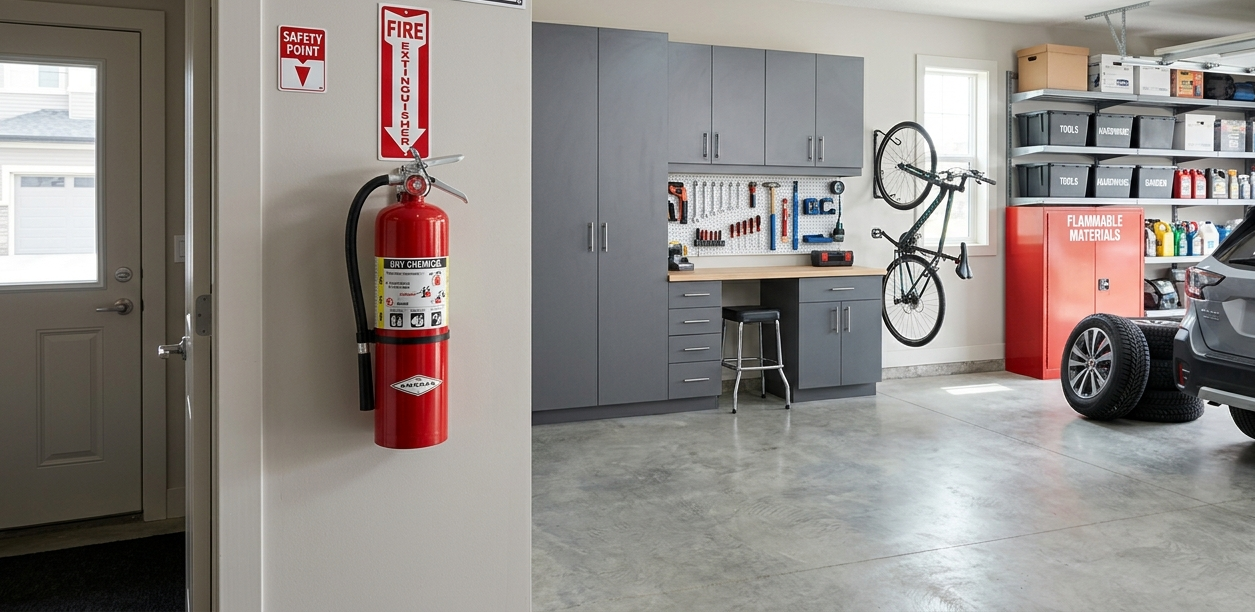
The Calgary Fire Department’s checklist recommends keeping a fire extinguisher in the garage.
Choose an extinguisher suited to the hazards in the space, mount it according to the manufacturer’s instructions and keep it visible and unobstructed near an exit.
An extinguisher should only be used on a small, contained fire when:
- everyone else is leaving;
- 9-1-1 has been called;
- smoke and heat are limited;
- the fire is not spreading; and
- you have a clear escape route behind you.
If the fire is growing, creating heavy smoke, involves fuel or propane, or makes you question whether you can control it, leave immediately.
Close doors behind you if it is safe to do so, stay outside and call 9-1-1.
We will cover extinguisher classes, placement, inspections and the PASS method in a separate article.
Use Calgary’s Household Hazardous-Waste Program
Keeping old chemicals “just in case” is how garages slowly turn into private hazardous-material warehouses.
Calgary residents can take accepted household hazardous waste to designated drop-off locations at no charge.
The City currently operates Eco Centres and fire-station household hazardous-waste depots, although not every location accepts every item.
Accepted materials may include:
- fuels;
- automotive fluids;
- paints;
- solvents;
- household chemicals;
- batteries;
- aerosols;
- propane tanks; and
- small fire extinguishers.
Some damaged batteries and specialized materials may only be accepted at Eco Centres.
Before leaving home:
- check the City’s current list of accepted household hazardous waste;
- confirm that the location accepts your specific material;
- keep products in their original containers whenever possible;
- otherwise use a sturdy, compatible, leak-proof container;
- close and label containers clearly;
- keep containers upright in a secure box or bin during transport; and
- never mix chemicals or pour them into a drain, toilet or household cart.
Visit Calgary’s Household Hazardous Waste program for current locations, hours and transportation instructions.
FIND A HOUSEHOLD HAZARDOUS WASTE DROP-OFF
Garage Fire-Safety Checklist
Before calling the garage finished, ask yourself:
- Are every door, window and walkway clear?
- Has unnecessary cardboard, paper, sawdust and yard waste been removed?
- Is gasoline stored in an approved container in a shed rather than the garage?
- Are propane cylinders stored outside?
- Are paints, solvents, aerosols and automotive fluids labelled and tightly closed?
- Are oily rags stored and disposed of properly?
- Are chargers kept away from combustible materials?
- Are damaged batteries removed from use?
- Are cords, outlets, tools and heaters in good condition?
- Does everyone know not to idle vehicles or operate fuel-powered equipment indoors?
- Is your vehicle key fob out of the reach of children who can trigger the auto start?
- Is the fire extinguisher visible and close to an exit?
- Does the door between the garage and home close properly?
- Are holes or damage in the garage walls and ceiling being professionally assessed?
- Have unwanted fuels, chemicals, batteries and cylinders been prepared for proper disposal?
A Safer Garage Starts With Less Risk
Garage safety is not just about sweeping the floor and organizing a few shelves.
It is about controlling ignition sources, keeping fuel and propane in safer locations, maintaining electrical equipment, monitoring batteries and getting rid of hazardous products you no longer need.
Start with one shelf, cabinet or workbench.
Read the labels. Check for leaks. Inspect the cords. Clear the exit. Set aside anything that needs to go to an approved Calgary disposal location.
A few small changes in the garage can prevent a fire from threatening the entire home.
For information about outdoor flames and fire-pit requirements, read our guide to Backyard Fires in Calgary.
This article is Part 2 of Calgary Safe at Home: A Fire Safety Series, a practical guide to preventing fires, protecting the people in your household and preparing your property for an emergency.

A Safer Garage Protects Your Entire Home
Your garage is more than a place to park the car—it's often where fuel, tools, batteries, chemicals and other combustible materials are stored. Keeping these items organized, properly stored and regularly inspected can significantly reduce the risk of a fire spreading into your home.
Through our Calgary Safe at Home series, I share practical advice to help homeowners create safer, better-maintained properties. From garage fire prevention and seasonal maintenance to emergency preparedness and home safety upgrades, my goal is to provide trusted local guidance that helps protect your family and one of your biggest investments.
Dusko Sremac – Calgary & Area REALTOR® | Team Lead, REPYYC
Cell: 403-988-0033 | Email: dusko@repyyc.com
Enjoy this blog post? Click here to subscribe for updates
Leave A Comment