
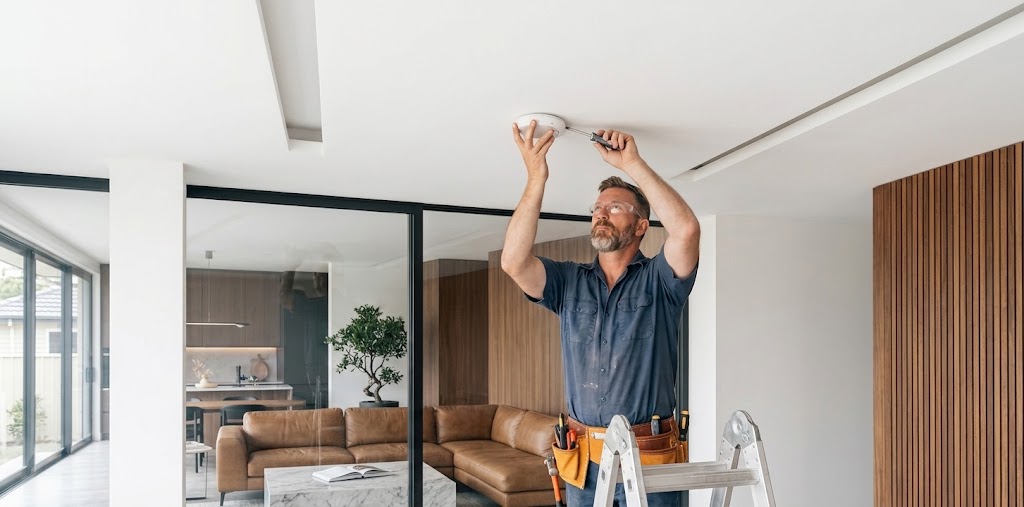
Smoke and Carbon Monoxide Alarms in Calgary: Placement, Testing and Replacement
Smoke and carbon monoxide alarms do different jobs, but both serve the same purpose: giving you enough warning to get everyone out safely.
A smoke alarm detects smoke from a fire. A carbon monoxide alarm detects a poisonous gas that cannot be seen, smelled or tasted.
They are not interchangeable. A combination alarm can detect both, but a smoke-only alarm will not warn you about carbon monoxide, and a CO-only alarm will not detect smoke.
The goal is straightforward: install the right alarms, put them in the right places and make sure they work when your household needs them.
Use Our Quick Navigation Guide Below To Jump To Any Part On Smoke and Carbon Monoxide Alarms in Calgary: 
- Start With Every Level and Every Sleeping Area
- Put Smoke Alarms in the Right Places
- Carbon Monoxide Is Invisible—and Potentially Deadly
- Interconnected Alarms Provide Better Warning
- Renovating or Adding a Secondary Suite?
- What Should You Look for When Buying an Alarm?
- Photoelectric, Ionization or Combination?
- Make Sure Everyone Can Hear the Alarm
- Test Every Alarm Monthly
- Do Not Ignore Chirping
- Replace Expired Alarms
- What to Do When an Alarm Sounds
- Make the Warning Count
Start With Every Level and Every Sleeping Area
The Calgary Fire Department recommends installing smoke alarms:
- Inside every bedroom
- Outside each sleeping area
- On every level of the home, including the basement
Carbon monoxide alarms should also be installed on every level and outside sleeping areas, following the placement instructions supplied with the alarm.
These recommendations apply whether you live in a detached home, townhouse, condo, apartment or secondary suite. Larger homes and unusual floorplans may require additional alarms.
Once installed, test whether the alarms can be heard inside every bedroom with the doors closed. An alarm may be technically working, but if it cannot wake someone sleeping on another floor, it is not providing enough warning.
Calgary Smoke Alarm Information Calgary Carbon Monoxide Alarm Information
Put Smoke Alarms in the Right Places
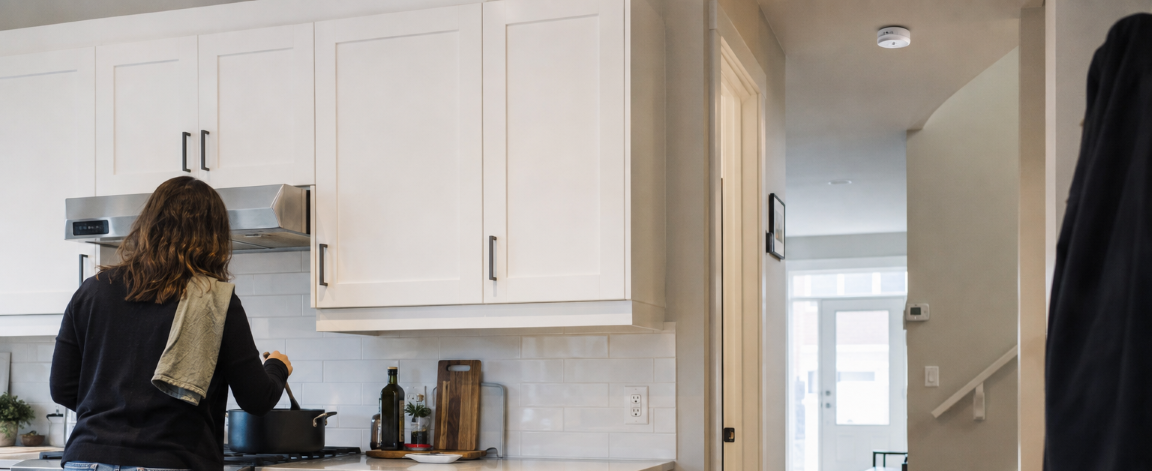
Smoke rises, which is why ceiling installation is generally recommended. Some alarms can also be mounted high on a wall, but the exact position depends on the model.
Avoid guessing. Follow the installation diagram supplied with the alarm.
Corners, ceiling peaks, air vents, windows, doors and fans can all affect how smoke reaches a device. Kitchens, bathrooms and garages can also expose smoke alarms to cooking vapour, steam, dust or exhaust that causes nuisance alarms.
If an alarm regularly sounds during normal cooking, do not remove the battery, cover the alarm or disconnect it.
Review its location and instructions instead. A properly placed photoelectric alarm or an alarm with a temporary hush feature may reduce nuisance alarms while maintaining protection.
Silencing the problem by disabling the alarm is not a solution. It is simply removing the warning system from the house.
Carbon Monoxide Is Invisible—and Potentially Deadly
Carbon monoxide is produced when fuels such as natural gas, propane, gasoline, oil, charcoal or wood do not burn completely.
Possible sources around a home include:
- Furnaces and boilers
- Water heaters
- Fireplaces and wood stoves
- Gas ranges
- Generators
- Barbecues and camp stoves
- Fuel-burning space heaters
- Vehicles running inside an attached garage
- Blocked or damaged exhaust vents
Calgary winters create an additional concern. Snow and ice can block furnace, water-heater and fireplace vents on the outside of a home. Leaves, nests and debris can cause similar problems during the rest of the year.
Check exterior vents regularly and after heavy snowfall.
Never leave a vehicle running inside a garage, even when the garage door is open. Never operate a barbecue, camp stove, generator or other outdoor fuel-burning appliance inside the home or an attached garage.
Possible symptoms of carbon monoxide exposure include headache, dizziness, weakness, nausea, vomiting, sleepiness and confusion.
If a CO alarm sounds—or several people in the home develop unexplained symptoms at the same time—get everyone outside immediately and call 9-1-1 from a safe location.
For a more detailed look at common sources, warning signs and prevention, read our complete Calgary carbon monoxide safety guide.
Read Our Carbon Monoxide Safety Guide
Interconnected Alarms Provide Better Warning .jpg)
In an interconnected system, when one alarm detects smoke or carbon monoxide, the other compatible alarms also sound.
That matters in a two-storey home, a home with a finished basement or anywhere a fire could begin far from the bedrooms. You do not want the basement alarm quietly doing its job while everyone upstairs sleeps through it.
Hard-Wired Alarms With Battery Backup
These alarms are connected to the home’s electrical system and can be interconnected throughout the property. A backup battery or sealed backup cell keeps them operating during a power outage.
They are commonly required in new homes, secondary suites and certain renovations.
Wireless Interconnected Alarms
These communicate with one another without requiring new wiring between every device. They can be a practical upgrade in an existing home where opening walls would be disruptive or expensive.
Every alarm must be compatible with the same system.
Standalone Battery Alarms
These are affordable and easy to install, but an alarm sounding in one area may not be heard throughout the house.
A working standalone alarm is still considerably better than having no alarm. However, interconnected coverage provides a stronger whole-home warning system.
Renovating or Adding a Secondary Suite?
Alarm requirements can become more specific when building a new home, finishing a basement, creating a secondary suite or modifying an existing hard-wired system.
City of Calgary guidance requires smoke alarms in basement bedrooms and hallways serving bedrooms during applicable basement development work. These alarms may need to be hard-wired and interconnected throughout the house.
Secondary suites can also require permanently wired and interconnected smoke and carbon monoxide alarms. Installing additional wired alarms requires an electrical permit.
Before making changes, confirm the requirements for your specific property with the City of Calgary or a qualified electrician. Do not replace a required hard-wired alarm with a battery-only model simply because it is easier.
Calgary Basement Alarm Requirements Check Secondary-Suite Requirements
What Should You Look for When Buying an Alarm?
There is no single best alarm for every Calgary home.
The right alarm is certified for use in Canada, suitable for its intended location, compatible with the rest of the system and loud enough to alert everyone who sleeps in the home.
Look for a recognized Canadian certification mark such as:
- CSA
- cUL
- ULC
- cETL
The certification mark should appear directly on the alarm—not only on the packaging or online product listing.
This matters, particularly when buying alarms from third-party online sellers. Health Canada has issued multiple warnings and recalls involving uncertified smoke and combination alarms that may not operate properly during a fire.
A cheap alarm that may not sound is not a deal. It is just a plastic circle on the ceiling.
Before You Buy an Alarm
Turn the alarm over and check the actual product—not just the box or online listing.
- Find a recognized Canadian certification mark
- Confirm the model is designed for Canadian use
- Check the manufacture and replacement dates
- Confirm compatibility with your existing alarms
- Search the brand and model for recalls
If the certification mark or manufacturer information is missing, do not take the chance.
View Canadian Certification Guidance Search Smoke Alarm Recalls
Before buying, confirm:
- Whether it detects smoke, carbon monoxide or both
- Whether it is certified for use in Canada
- Whether it is compatible with your existing system
- Its power source and backup-power requirements
- Its manufacture date and replacement date
- Whether it includes a hush feature
- Whether it can interconnect with other alarms
- Whether it includes accessible alerting features if needed
Do not assume two alarms will work together because they are made by the same company or use a similar connector. Product lines and generations can have different compatibility requirements.
Photoelectric, Ionization or Combination? .jpg)
Photoelectric smoke alarms generally respond more quickly to slow, smouldering fires and may be less likely to react to ordinary cooking activity.
Ionization alarms generally respond more quickly to fast, flaming fires.
Both technologies provide protection. Some alarms incorporate both sensing methods, while others combine smoke and carbon monoxide detection in one unit.
The priority is not chasing the fanciest device on the shelf. It is making sure you have complete, certified and properly installed coverage without leaving gaps.
Make Sure Everyone Can Hear the Alarm
A standard audible alarm may not adequately protect everyone.
For Deaf or hard-of-hearing residents, consider a compatible system that includes visual strobes, bed or pillow shakers or other specialized alerting equipment.
Older adults, young children and heavy sleepers may also fail to wake quickly when an alarm sounds. Test alarms from the bedrooms with doors closed and make sure every person understands what the different warning sounds mean.
Do not rely on a Wi-Fi notification, smartphone app or smart speaker as the primary warning. Those features can be useful, but the alarm must still alert people inside the home if the internet is down, a phone is on silent or a cloud service is unavailable.
Calgary Assistive Alerting Devices
Test Every Alarm Monthly
Press the test button on every smoke, CO and combination alarm once a month, or as directed by the manufacturer.
While testing:
- Confirm every interconnected alarm sounds
- Listen from each bedroom with the door closed
- Make sure children recognize the sound
- Confirm older adults and anyone with hearing loss can detect the warning
- Check that the alarm is not blocked, painted or damaged
- Record the test date
The test button checks the electronics and sounder. Never test an alarm using a flame, smoke from burning material or another improvised method.
Clean alarms only as directed. Some models can be lightly vacuumed around their exterior vents, but cleaners, paint, water and air fresheners should never be sprayed into an alarm.
Renovation dust can also affect performance. If work is planned inside the home, speak with the contractor about protecting the alarms without leaving the property unprotected.
Do Not Ignore Chirping
A chirp may indicate:
- A low backup battery
- An expired alarm
- Contamination
- A power problem
- A device fault
Check the model’s instructions and date label instead of assuming it only needs a new battery.
Hard-wired alarms can still contain backup batteries that require maintenance. Sealed 10-year batteries are designed to remain inside the alarm for its service life; when the battery reaches the end of its life, the entire alarm is replaced.
Do not remove a battery just to stop the noise and promise yourself you will deal with it later. “Later” has a remarkable talent for becoming six months.
Replace Expired Alarms
Smoke alarms should generally be replaced after 10 years.
Carbon monoxide alarms have model-specific service lives and must be replaced by the date printed on the device or stated in the manual. Some may require replacement sooner than a smoke alarm.
Replace an alarm if:
- It has reached its expiry date
- Its manufacture date is unknown
- It fails a test
- It is damaged or painted
- It continues chirping after proper troubleshooting
- It does not carry a recognized Canadian certification mark
- It is no longer compatible with the interconnected system
Write the replacement date somewhere easy to find, keep the manual and add the next expiry date to your phone or household-maintenance calendar.
What to Do When an Alarm Sounds .jpg)
Treat every alarm as real.
If a Smoke Alarm Sounds
- Get everyone outside using the planned escape route.
- Close doors behind you when possible.
- Go directly to the household meeting place.
- Call 9-1-1 from outside.
- Stay outside until firefighters say it is safe to return.
Do not delay your escape to investigate, gather belongings or find a pet. Tell firefighters if a person or animal may still be inside.
If a Carbon Monoxide Alarm Sounds
- Get everyone outside into fresh air immediately.
- Call 9-1-1 from a safe location.
- Do not re-enter until emergency responders say it is safe.
- Have the suspected appliance, venting or heating system inspected before using it again.
Do not open windows and remain inside while trying to locate the source. Get out first.
10-Minute Home Check
Your Household Alarm Audit
Walk through the home one level at a time. Check each item before moving to the next floor.
Upper Level
☐ Smoke alarm inside every bedroom
☐ Smoke alarm outside sleeping areas
☐ CO alarm outside sleeping areas
☐ Alarms can be heard with bedroom doors closed
Main Level
☐ Smoke-alarm coverage on the level
☐ CO-alarm coverage on the level
☐ Alarms are clear of steam, vents and obstructions
☐ Exterior fuel-appliance vents are clear
Basement or Secondary Suite
☐ Smoke-alarm coverage on the level
☐ Smoke alarm inside every bedroom
☐ CO alarm near sleeping areas
☐ Required alarms are properly interconnected
Every Alarm
☐ Passed the monthly test
☐ Carries a Canadian certification mark
☐ Has not reached its replacement date
☐ Is clean, uncovered and undamaged
☐ Can be recognized by everyone in the home
Calgary Home Safety Program Download Calgary’s Home Safety Checklist
Make the Warning Count
Smoke and carbon monoxide alarms are not complicated equipment, but they are easy to neglect because they sit quietly in the background.
They need the right placement, reliable power, regular testing and a clear escape plan behind them.
Walk through your home this month. Find every alarm, check its date, press the test button and replace anything missing, expired or unreliable.
It may take less than ten minutes.
If something ever goes wrong, those ten minutes could be the reason everyone gets out.
This article is Part 4 of Calgary Safe at Home: A Fire Safety Series, a practical series focused on preventing fires, protecting the people in your home and preparing for an emergency.

Small Home Safety Checks Can Make a Big Difference
Smoke and carbon monoxide alarms are easy to overlook because they quietly protect your home in the background. But when seconds matter, proper placement, regular testing and working alarms can give your family the warning they need to get outside safely.
Through our Calgary Safe at Home series, I share practical information to help Calgary homeowners prevent fires, prepare for emergencies and protect the people who matter most. From smoke and carbon monoxide alarms to garage fire prevention, battery safety and seasonal home maintenance, my goal is to provide useful local guidance that helps you protect both your family and one of your biggest investments.
Dusko Sremac – Calgary & Area REALTOR® | Team Lead, REPYYC
Cell: 403-988-0033 | Email: dusko@repyyc.com
Enjoy this blog post? Click here to subscribe for updates
Leave A Comment