
The Calgary Stampede: A Deep Dive into the Greatest Outdoor Show on Earth!
Strap in, cowpokes — whether you’re a die-hard Stampede veteran or a curious newbie, this isn’t just another yeehaw rodeo recap. The Calgary Stampede is a 10-day cultural juggernaut that flips the city on its head every July — and it’s way more than just belt buckles, boots, and bulls.
We’re diving deep into the wild roots, rebel energy, Indigenous partnership, behind-the-scenes drama, and hidden gems that make this spectacle unlike anything else in Canada. Ready to have your boots knocked clean off? Let’s go.
Use our quick navigation guide below to jump to any point of our blog on Calgary Stampede: 
- The Trick Roper Who Dreamed Big — And Got Rejected
- The 1912 Stampede: No Rules, Just Raw
- How It Stuck: War Heroes, Airplanes, and Exploding Ovens
- The Powerful Role of Treaty 7 First Nations
- It’s Not Just Rodeo: It’s Calgary on Overdrive
- Hidden Treasures & Bizarre Backstories
- The Stampede’s Future: Year-Round Impact
- This Ain’t Just a Rodeo
The Trick Roper Who Dreamed Big — And Got Rejected
The story of the Calgary Stampede doesn't actually begin in Alberta.
It begins with Guy Weadick, a trick roper from Rochester, New York, who believed Calgary was the ideal place to celebrate the culture, traditions, and spirit of the Canadian West. In 1912, he envisioned a frontier exhibition unlike anything North America had seen before.
At first, his idea was met with skepticism. The Calgary Exhibition wasn't interested, and many local business leaders questioned whether an event of that scale could succeed.
Weadick eventually found support from four influential Alberta ranchers—Pat Burns, George Lane, A.E. Cross, and A.J. Maclean—better known as the Big Four. Together, they invested $100,000, an extraordinary amount at the time, to bring his vision to life.
That investment laid the foundation for what would become one of the world's most recognized western celebrations and helped establish Calgary's reputation as the heart of Canada's western heritage.
The 1912 Stampede: No Rules, Just Raw
The first Calgary Stampede looked very different from the event we know today.
There were no loading chutes, no standardized eight-second rule, and few of the safety measures found in modern rodeo. Cowboys saddled their broncs in the open arena, and some rides lasted several minutes rather than seconds.
The competition reflected the realities of ranch life across Western Canada and quickly captured the attention of spectators. One newspaper advertisement even encouraged attendees to greet one another with "Whoopee-ee-ee!" instead of "Yahoo!" It's safe to say only one of those expressions stood the test of time.
Despite early skepticism from some members of the media, the inaugural Stampede was a tremendous success. More than $20,000 in prize money was awarded—an extraordinary amount in 1912—and thousands of spectators attended what was originally intended to be a one-time celebration.
Fortunately for Calgary, that wasn't how the story ended.
How It Stuck: War Heroes, Airplanes, and Exploding Ovens
After a brief hiatus, Guy Weadick returned in 1919 to organize the Victory Stampede, a special event honouring Canadian soldiers returning home after the First World War. The celebration included one memorable moment when a stunt aircraft crash-landed at the fairgrounds. Fortunately, no one was seriously injured.
In 1923, the Calgary Stampede merged with the Calgary Industrial Exhibition, creating the annual event that continues to this day. That same year also marked the introduction of chuckwagon racing, which quickly became one of the Stampede's signature attractions. In its early years, the chuckwagons carried fully equipped camp stoves, and stories of competitors adding extra fuel to gain an advantage have become part of Stampede folklore.
Over the decades, the Calgary Stampede continued to grow in both size and reputation. It welcomed distinguished guests including the Queen Mother and Walt Disney, while milestones such as Pat Burns' 75th birthday celebration—complete with a cake that fed thousands—reflected just how deeply the Stampede had become woven into Calgary's history and culture.
The Powerful Role of Treaty 7 First Nations

One of the most significant chapters in the Calgary Stampede's history is its longstanding relationship with the Treaty 7 Nations.
In 1912, Indigenous peoples living on reserves faced strict federal restrictions that limited their ability to leave their communities, wear traditional regalia, and openly celebrate their cultures. Recognizing that Indigenous traditions were an essential part of the history of the Canadian West, Guy Weadick obtained permission for more than 200 members of the Treaty 7 Nations to participate in the first Calgary Stampede.
Their involvement included leading the parade, setting up tipis, and sharing their culture through what would eventually become Elbow River Camp—now one of the most important cultural experiences at the Calgary Stampede.
More than a century later, that partnership continues. Elbow River Camp remains a place where visitors can learn about the history, traditions, and cultures of the Treaty 7 Nations through storytelling, art, dance, and community. The Stampede also celebrates Indigenous culture through events such as the Calgary Stampede Powwow, the First Nations Princess program, and the Lady Warrior relay races, recognizing the ongoing contributions of Indigenous communities to the Stampede and to southern Alberta.
It’s Not Just Rodeo: It’s Calgary on Overdrive
Sure, there’s world-class bull riding and bronc busting. But the Stampede’s real power is how it completely transforms Calgary. 
- Free pancake breakfasts hosted by businesses, community associations, and neighbourhood organizations across Calgary.
- A lively midway featuring rides, games, live entertainment, and some of the most creative fair food you'll find anywhere.
- More than 3,000 volunteers who help bring the Stampede to life each year.
- Youth programs that introduce more than 50,000 young people annually to agriculture, animal care, western heritage, and the performing arts.
- Nightly chuckwagon racing, concerts, the Grandstand Show, and fireworks that have become signature Stampede traditions.
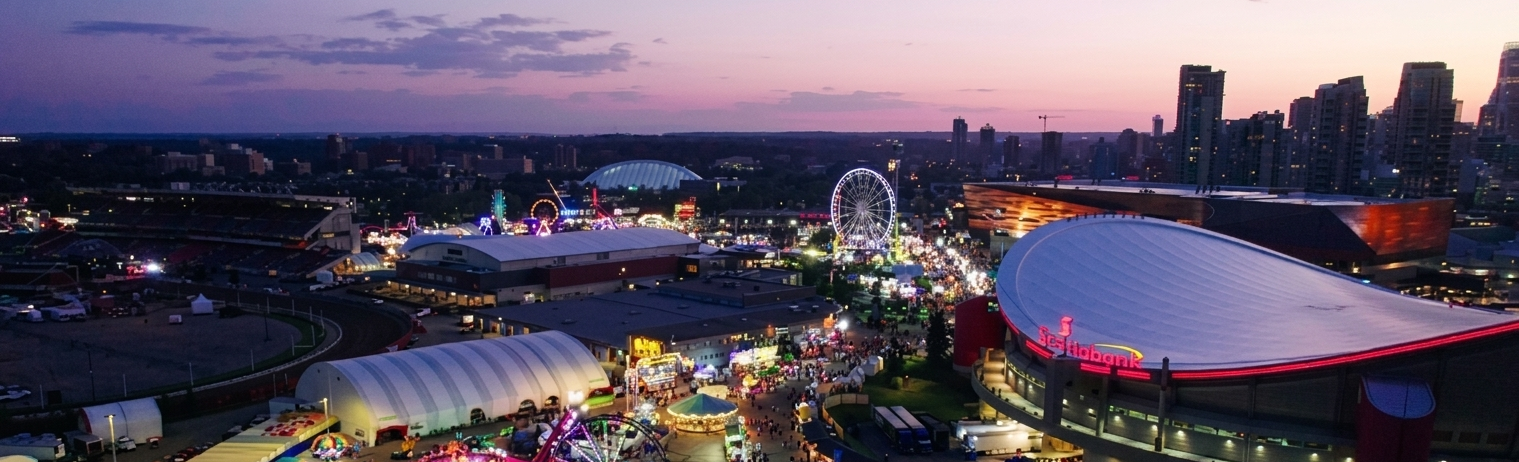
For ten days each summer, the Calgary Stampede extends far beyond the grounds themselves. Neighbourhoods embrace the western spirit, local businesses welcome visitors from around the world, and the entire city becomes part of the celebration.
Hidden Treasures & Bizarre Backstories
The Calgary Stampede Archives preserve thousands of artifacts that tell the story of how the event has evolved over more than a century. Among them are some surprising pieces of Stampede history:
- A 1928 bronc riding trophy believed to have been repurposed from a corporate Christmas gift.
- A ceremonial sword presented by Wilkinson Sword in 1972, engraved with scenes celebrating rodeo and western heritage.
- A papier-mâché maraca created for a children's Stampede art contest in the 1960s, where first prize was just one dollar.
The archives also recognize the people who helped shape the Stampede's future. In 1996, barrel racer Monica Wilson successfully advocated for equal prize money for women competing at the Calgary Stampede. That same year, she received the Guy Weadick Award in recognition of her contributions, marking an important milestone in the event's history.
The Stampede’s Future: Year-Round Impact
The Calgary Stampede has grown into far more than a ten-day celebration.
Today, it generates more than $540 million in annual economic activity for Alberta while supporting agriculture, education, youth programs, and community initiatives throughout the year. Even in 2020, when the Stampede was cancelled for the first time in more than a century, many of its educational and community programs continued to serve Albertans.
That year-round commitment is also reflected in the SAM Centre, an interactive cultural attraction dedicated to preserving and sharing the stories, traditions, and history of the Calgary Stampede. Through immersive exhibits, guided experiences, special events, and educational programming, the SAM Centre ensures that the legacy of the Stampede can be experienced well beyond the ten days each July.
This Ain’t Just a Rodeo
The Calgary Stampede is a cultural lightning bolt — part history, part party, part unbreakable community spirit.
So next time you hear “Yahoo!” or see a Stetson, remember the wild, wonderful, rebellious history behind it all. And if you haven’t experienced the Stampede for yourself? Fix that.
Because once a year, Calgary doesn’t just throw a party - it becomes one.
2026 CALGARY STAMPEDE ACTIVITIES
Location: Downtown Calgary (9th Ave & 1st St SE to 4th St SE)
Date & Time: Friday, Jul 3 | 9:00 AM (Prelude begins at 7:30 AM)
• Features more than 150 western-themed entries, 40 floats, 750 horses, and over 4,000 participants.
• Includes 30 marching bands with more than 1,500 performers.
• Officially kicks off the Calgary Stampede with a 4.5 km route through downtown.
Location: GMC Stadium, Stampede Park
Date & Time: Daily, Jul 3–12 | 1:30 PM
• Watch the world's top rodeo competitors compete in authentic western events.
• Championship Sunday features the highest-ranked athletes competing for the title.
• One of the Calgary Stampede's signature experiences.
Location: Grandstand, Stampede Park
Date & Time: Nightly, Jul 3–12 | 7:15 PM
• Features the Rangeland Derby Chuckwagon Races, ENMAX Relay Races, and the Grandstand Show.
• Live entertainment from Alberta's High Valley and the Young Canadians.
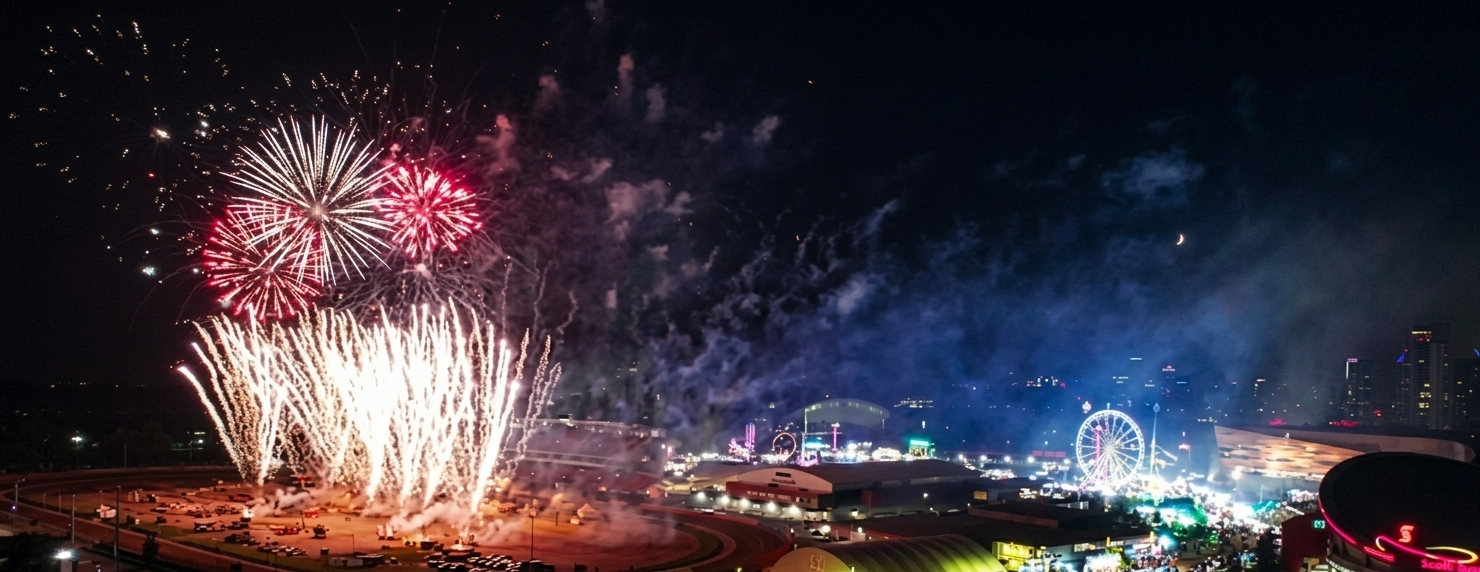
• Ends each evening with spectacular fireworks.
Location: Stampede Park Midway
Date & Time: Jul 3–12 | All Day
• More than 50 new food creations from local and international vendors.
• Everything from classic midway treats to inventive global flavours.
• A favourite stop for food lovers every Stampede.
Location: Scotiabank Saddledome, Coca-Cola Stage & Nashville North
Date & Time: Jul 2–12 | Various Times
• Major Canadian and international artists perform throughout Stampede.
• Many concerts at Coca-Cola Stage and Nashville North are included with park admission.
• Entertainment spans multiple musical genres.
Location: Scotiabank Saddledome
Date & Time: Jul 7 & 8
• Celebrates Indigenous culture through world-class dancing and drumming.
• Included with Stampede Park admission.
• One of North America's premier powwow events.
Location: Stampede Park
Date & Time: Jul 2–12 | Multiple Daily Shows
• Professional freestyle motocross demonstrations.
• Incredible aerial stunts performed throughout the day.
• Included with Stampede Park admission.
Location: Dog Bowl Arena, Community Park South, Stampede Park
Date & Time: Jul 2–12 | Multiple Daily Shows
• High-energy canine competitions and entertainment.
• Agility courses, tricks, and acrobatic performances.
• A fun, family-friendly attraction included with park admission.
For the complete event schedule, tickets, and additional information, visit www.calgarystampede.com.
Planning Your Visit
Whether you're attending for a single afternoon or spending several days exploring everything the Stampede has to offer, planning ahead can make a big difference.
Parking around Stampede Park fills quickly, so many visitors choose Calgary Transit, with direct CTrain access to Stampede Station and Victoria Park/Stampede Station. Purchasing tickets online in advance can also save time, especially for the rodeo, Evening Show, concerts, and special attractions.
If you're visiting from outside Calgary, consider exploring nearby communities like East Village, Inglewood, Mission, and Beltline before or after your day at the Stampede. Each offers its own unique restaurants, shops, river pathways, and local attractions within minutes of the grounds.
Calgary's Western Roots
The Calgary Stampede has become much more than an annual celebration.
It tells the story of Calgary's western roots while showcasing the city as it exists today—welcoming, diverse, and proud of its traditions. From its remarkable beginnings in 1912 to the world-class event it has become, the Stampede continues to bring communities together in a way few festivals can.
Whether you're attending your first rodeo, introducing your family to the midway, enjoying a neighbourhood pancake breakfast, or simply taking in the atmosphere downtown, the Stampede offers a glimpse into what makes Calgary such a special place to call home.

The Calgary Stampede Is More Than a Festival—It's Part of Our City's Identity
Few events showcase Calgary quite like the Stampede. Every July, neighbourhoods come alive with pancake breakfasts, parades, concerts, rodeo action, and community celebrations that bring residents and visitors together while highlighting the western heritage that helped shape our city.
As someone who has helped thousands of families find their place in Calgary, I know the Stampede is about more than ten days of entertainment. It's a reminder of the strong sense of community, volunteer spirit, and unique lifestyle that make Calgary such an incredible place to call home—long after the last firework lights up the sky.
Dusko Sremac – Calgary & Area REALTOR® | Team Lead, REPYYC
Cell: 403-988-0033 | Email: dusko@repyyc.com
Enjoy this blog post? Click here to subscribe for updates
Leave A Comment